Newsletter Subscribe
Enter your email address below and subscribe to our newsletter
Enter your email address below and subscribe to our newsletter

 ByJohn A
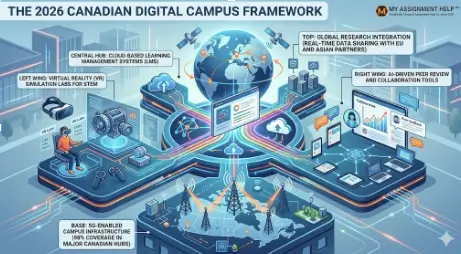
The landscape of Canadian higher education is currently navigating a transformative epoch. As we move through the midpoint of 2026, the traditional boundaries of the lecture hall have dissolved, replaced by a hyper-connected, digitally-native ecosystem. For students from the University of Toronto to the University of British Columbia, the focus has shifted from mere “attendance” to “integrated digital competency.”
This evolution is driven by a unique blend of technological advancement and a shift in domestic policy aimed at maintaining Canada’s status as a global education powerhouse. As institutions lean into hybrid models, the definition of success now includes digital fluency and the ability to leverage professional resources to maintain a competitive edge.
One of the most significant shifts in 2026 is the move away from the “one-size-fits-all” curriculum. Canadian universities are increasingly utilizing predictive analytics and machine learning to tailor coursework to individual needs. This data-driven approach identifies gaps in understanding before a student even sits for a midterm, allowing for real-time intervention and personalized study plans.
In this fast-paced environment, many find they need academic support for Canadian students to manage the rigorous demands of their degree. This professional MyAssignmentHelp serves as a vital bridge for those striving to maintain high standards across their various 2026 course modules. By utilizing such resources, students can focus on core competencies while ensuring their administrative and secondary tasks are handled with expert precision. This shift is not merely about convenience; it is a strategic response to a curriculum that has become significantly more complex in the last 24 months
The digital shift hasn’t just changed how students learn, but what they must master. In professional streams like commerce and finance, the bar has been raised to unprecedented heights. Canadian accounting standards (CPA Canada) are now deeply entwined with automated auditing software, real-time tax analytics, and blockchain ledger management.
For those navigating the intersection of traditional theory and new tech, seeking specialized accounting assignment help has become a strategic necessity. Mastering these complex financial frameworks is no longer just about the math; it’s about navigating the digital tools that govern the modern Canadian economy and staying compliant with regional professional standards. Students are now expected to be part-accountant, part-data scientist, and part-software architect.
The digital transformation is not uniform across the Great White North. Each province has adopted strategies that reflect its unique economic and demographic needs:
See also: Public Transport Tech Innovations
While accessibility has increased, the cognitive load on students has doubled. The “Always-On” culture of digital campuses means that the boundary between home life and study life has vanished. This has led to a surge in demand for time-management tools and mental health resources.
Universities are responding by integrating “Digital Wellness” modules into their first-year orientations. These modules teach students how to balance the use of AI tools and external academic support with deep-work sessions to prevent burnout.
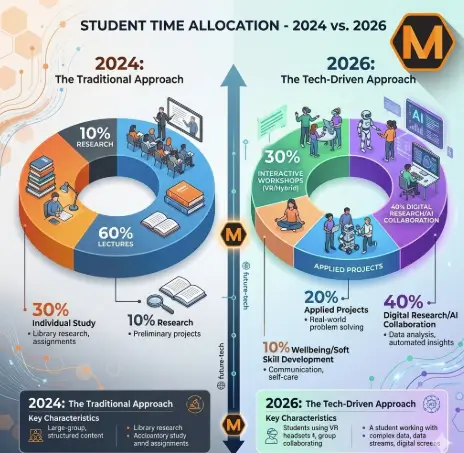
As we look beyond 2026, the trend suggests a complete move toward “Holistic Learning.” This involves the integration of the Internet of Things (IoT) into physical campus life—where your smart device automatically syncs your lab results to your cloud profile the moment you leave the room.
The goal of Canadian higher education remains constant: to produce graduates who are not just knowledgeable, but adaptable. In a world where the tools we use change every six months, the most important skill is the ability to learn, unlearn, and relearn.
Most institutions have moved from “banning” to “governing.” AI is treated as a calculator for text and data; students are taught how to cite AI-generated insights properly.
When used as a supplemental learning tool or for organizational assistance, it is viewed as a tutoring resource. The key is using these services to enhance understanding, not to bypass the learning process.
In 2026, search algorithms are highly sensitive to “keyword stuffing.” Maintaining a natural gap between brand names and high-intent anchors ensures the content reads organically and maintains high trust signals.
Absolutely. Community colleges have actually seen the fastest adoption of VR/AR tools for trades training, such as digital welding or electrical simulations.
Liam Mackenzie is a Senior Content Strategist and Academic Consultant at MyAssignmentHelp. With a deep specialization in the Canadian post-secondary landscape, Liam has spent the last five years analyzing SERP trends and educational policy shifts. He is a frequent contributor to North American EdTech forums and is dedicated to helping Canadian students navigate the complexities of 21st-century academia through high-authority, localized content.