
Sauna heat and cold-water immersion get compared constantly for recovery, but they answer different questions with different evidence. Sauna research is built on long-term cohort studies linking regular heat exposure to lower cardiovascular and all-cause mortality, plus short-term studies showing measurable changes in blood-based cardiovascular markers right after a session. Cold-plunge research, by contrast, focuses on short-term recovery markers after training and is genuinely mixed, with some trials suggesting cold exposure soon after resistance work can blunt strength and hypertrophy adaptations. A beginner choosing between the two is picking two different tools for two different jobs, not two versions of the same idea.
What Does Sauna Research Actually Track Compared to Cold Exposure?
The core sauna evidence comes from Finnish cohorts followed for decades, comparing how often people bathed against fatal cardiovascular events and all-cause mortality years later. It is a long-arc dataset about habitual heat exposure as a lifestyle pattern, not a study of any single post-workout session. Cold-water immersion research usually looks the opposite direction: short trials measuring muscle soreness, inflammation markers, or strength output in the days after training. Neither body of research was designed to answer “which is better for recovery today,” and stacking a headline from one against a headline from the other tends to overstate what either actually shows.
What Happens in the Body During a Heat Session?
A 2018 study in Heart and Vessels measured blood-based markers of cardiovascular function in regular sauna users immediately after a session and found measurable short-term shifts consistent with the body’s acute response to heat stress. That is a different kind of evidence than the multi-year mortality studies. It shows a plausible physiological reaction happening in real time without proving, on its own, that this reaction is what drives faster recovery from a specific training session. Anyone using a heater after a workout is applying general heat-response research to a personal routine, which is a reasonable thing to do, but it is worth being honest that the studies were not built around that exact scenario.
Do the Cardiovascular and Fitness Studies Say Anything About Training?
A 2018 study in Annals of Medicine found that sauna bathing combined with higher cardiorespiratory fitness was associated with a lower joint risk of cardiovascular and all-cause mortality than either factor by itself. That points to sauna use fitting naturally alongside an active routine rather than working against it, which is relevant background for someone building a post-workout habit. It does not mean a sauna session accelerates muscle repair or replaces proper rest; it means regular heat exposure and regular training appear to be compatible habits in the population data, measured over years rather than single sessions.
How Does a Heater’s Size Affect a Regular Post-Workout Routine?
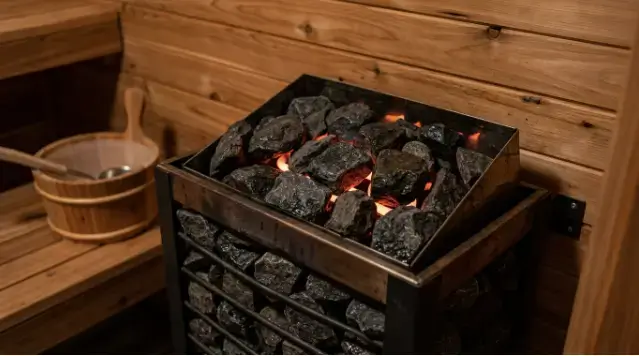
For someone planning to use a sauna several times a week after training, heater sizing matters more than it does for occasional use, since an undersized unit takes longer to recover heat between sessions and discourages the frequency the research associates with better outcomes. The standard rule of thumb is about 1 kW per 45 to 50 cubic feet of all-wood interior, with roughly 20 percent added for a glass wall or door. A compact one- or two-person cabin usually runs comfortably on 4.5 to 6 kW, which reheats fast enough for back-to-back household use without waiting long between sessions. Once the room dimensions are settled, it is worth comparing current heater models from SweatDecks and a couple of other specialty retailers to see how recovery time and control features differ between comparable wattages.
See also: The two-minute test most businesses have never run
What Timing Actually Makes Sense After a Workout?
There is no controlled study pinning down an exact number of minutes to wait after exercise before a sauna session, so this is practical guidance rather than a research finding. Most people let heart rate and breathing settle back toward resting levels first, often 20 to 30 minutes post-workout, and start with a shorter session, five to ten minutes, than they would use on a non-training day. Hydration before stepping in matters more after a sweaty workout than it does on a rest day, since the body is already down fluid before adding more heat stress on top of it.
What Rock Bed and Clearance Details Matter for Frequent Use?
Home electric heaters generally call for 40 to 100 pounds of sauna-grade stones, loaded loosely enough for air to circulate; overpacking the rock bed slows heat-up and shortens element life, which becomes a bigger issue for someone running sessions several times a week rather than occasionally. Clearance from the heater guard to benches and walls is a fixed safety spec, typically a few inches on the sides and more in front, and it should never be reduced to fit a smaller room. A heater that stays easy and quick to use tends to actually get used at the frequency a recovery routine depends on.
Where Does This Leave a Beginner Weighing Heat Against Cold?
Given the state of the evidence, a fair summary is that sauna heat has decades of population-level cardiovascular association behind it and a plausible short-term physiological signal, while cold-water immersion has a smaller and more mixed body of recovery-specific research that leans cautious about timing relative to strength training. Neither answers the exact question “does this speed up recovery from my workout today.” Someone building a habit around either one is making a reasonable bet based on the closest available evidence, not following a proven recovery protocol. Many people end up using both at different points in a week, heat after an easier training day and cold reserved further from a heavy resistance session, rather than treating the choice as strictly either-or.
Frequently Asked Questions
Is a sauna heater better than a cold plunge for post-workout recovery? They are not measuring the same thing. Sauna research tracks long-term cardiovascular outcomes from habitual use, while cold-immersion research on short-term recovery is mixed and can blunt strength gains if used too soon after resistance training.
How soon after a workout should a beginner use a sauna heater? There is no research-backed timer. Most people wait until heart rate settles, often 20 to 30 minutes, and start with a shorter session than they would use on a rest day.
What heater output makes sense for regular post-workout sessions? Roughly 1 kW per 45 to 50 cubic feet of wood-lined space, with a heater that reheats quickly being more practical than a larger, slower-recovering unit.
Does a sauna heater need special stones for recovery-focused use? Standard sauna-grade stones work fine. Loading the recommended weight loosely for airflow matters more than any special rock type.
References
- Short-term effects of Finnish sauna bathing on blood-based markers of cardiovascular function in non-naive sauna users, Heart and Vessels, 2018
- Joint associations of sauna bathing and cardiorespiratory fitness on cardiovascular and all-cause mortality risk: a long-term prospective cohort study, Annals of Medicine, 2018
- Association between sauna bathing and fatal cardiovascular and all-cause mortality events, JAMA Internal Medicine, 2015
By Patrick Lonergan