Newsletter Subscribe
Enter your email address below and subscribe to our newsletter
Enter your email address below and subscribe to our newsletter

 ByJohn A
The kitchen is one of the most important spaces in any home. It serves as a place for preparing meals, spending time with family, and entertaining guests. A well-designed kitchen can improve the overall appearance of a home while making everyday کابینت activities more convenient. Among the many elements that influence kitchen design, cabinets play a particularly important role. They provide essential storage, establish the room’s visual character, and help connect different design features.
Exploring trending kitchen cabinet styles is an excellent way to discover new ideas for improving your interior design. From modern minimalist cabinets to traditional wooden finishes, homeowners have numerous options to match their preferences, budgets, and available space. Choosing the right style can transform an ordinary kitchen into an attractive and functional environment.
Minimalist kitchen cabinets remain a popular choice for homeowners who appreciate clean lines and uncluttered spaces. This design emphasizes simplicity, functionality, and carefully selected materials. Flat-panel cabinet doors, concealed handles, and smooth finishes create a streamlined appearance that works particularly well in contemporary homes.
Neutral colors such as white, beige, gray, and soft black are common in minimalist kitchens. These shades create a calm atmosphere and make it easier to coordinate cabinets with countertops, flooring, and appliances.
Handleless cabinets are another important feature of this style. Push-to-open mechanisms and integrated finger pulls reduce visual distractions while maintaining convenient access to storage.
Minimalist cabinetry is especially suitable for smaller kitchens because its simple appearance can make the room feel more spacious. However, homeowners should consider incorporating different textures or subtle accents to prevent the design from appearing too plain.
Natural wood cabinets are an excellent option for people who want to introduce warmth and character into their kitchens. Wood offers distinctive grain patterns, natural variations, and timeless appeal that can complement both traditional and modern interiors.
Oak, walnut, maple, and ash are popular choices for kitchen cabinetry. Light oak creates an airy Scandinavian-inspired appearance, while walnut provides a richer and more sophisticated finish. Maple offers a relatively smooth grain, making it suitable for homeowners who prefer a more uniform look.
One growing design approach is combining natural wood cabinets with white countertops or neutral backsplashes. This combination balances warmth with brightness and creates a welcoming environment.
Wood cabinets can also work beautifully with stone surfaces, metal hardware, and warm lighting. To maintain their appearance, homeowners should choose appropriate protective finishes and clean cabinet surfaces according to the manufacturer’s recommendations.
Two-tone cabinets provide an opportunity to introduce contrast without overwhelming the kitchen. Instead of using one color throughout the space, designers combine two complementary shades to create depth and visual interest.
A popular approach is installing darker cabinets on the lower level and lighter cabinets on the upper level. For example, navy blue base cabinets paired with white upper cabinets can create a balanced and sophisticated appearance.
Another attractive combination includes sage green cabinets with natural wood accents. Charcoal gray and warm beige can also produce a contemporary look that feels elegant without appearing too dramatic.
Two-tone designs are particularly useful in open-plan homes because they can help define the kitchen area while maintaining a connection with the surrounding living spaces.
When selecting colors, consider the amount of natural light, the size of the kitchen, and the existing interior palette. Limiting the design to two main cabinet colors usually creates a more cohesive result.
Shaker cabinets are known for their simple recessed-panel doors and balanced proportions. Their understated design makes them suitable for a wide range of interior styles, including farmhouse, transitional, traditional, and contemporary kitchens.
White Shaker cabinets remain a classic option because they create a bright and versatile foundation. However, modern interpretations also include deep green, navy, warm gray, and natural wood finishes.
One advantage of Shaker cabinetry is its adaptability. Homeowners can change the overall appearance by selecting different handles, countertops, backsplashes, and lighting fixtures without replacing the cabinets themselves.
For a contemporary interpretation, combine Shaker cabinets with slim black handles and simple stone countertops. For a more traditional atmosphere, consider brass hardware, decorative lighting, and warm-toned surfaces.
Shaker cabinets offer a practical balance between decorative detail and visual simplicity, making them a reliable choice for long-lasting kitchen designs.
Dark kitchen cabinets can create a dramatic and luxurious appearance. Shades such as charcoal, forest green, deep navy, and black are increasingly popular among homeowners who want their kitchens to make a strong design statement.
When combined with suitable lighting and contrasting materials, dark cabinetry can add depth and sophistication. For example, black cabinets paired with light marble-look countertops create a striking contrast, while deep green cabinets complement brass hardware and warm wooden accents.
Lighting is especially important when using darker colors. Kitchens with limited natural light may benefit from reflective surfaces, under-cabinet lighting, and lighter walls.
Dark cabinets can also be balanced with pale flooring or a bright backsplash to prevent the room from feeling visually heavy. Selecting a finish that suits household cleaning habits is equally important because fingerprints, dust, and smudges may be more noticeable on some dark surfaces.
Glass-front cabinets introduce a lighter and more decorative element into kitchen interiors. They allow homeowners to display attractive glassware, dishes, decorative bowls, and carefully arranged kitchen accessories.
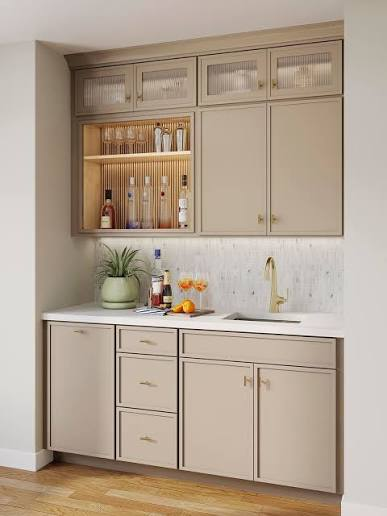
Clear glass creates an open appearance, while frosted or textured glass provides a degree of visual privacy. Ribbed glass is another appealing option for adding texture and contemporary character.
Rather than installing glass doors throughout the kitchen, consider using them on a small section of upper cabinetry. This approach creates a focal point without requiring every storage area to remain perfectly organized.
Open shelving can complement glass-front cabinets by providing space for frequently used items and decorative objects. However, open storage requires regular cleaning because exposed surfaces can collect dust and cooking residue.
For a practical design, combine open shelves with closed cabinets to maintain an attractive appearance while keeping everyday essentials organized.
Warm neutral colors are an excellent choice for homeowners who want a comfortable, natural-looking kitchen. Shades such as cream, taupe, sand, mushroom, and warm beige offer a softer alternative to bright white or cool gray.
These colors coordinate easily with natural stone, wooden flooring, brushed metal hardware, and textured backsplashes. They also create a welcoming atmosphere that works well in both compact apartments and spacious family homes.
Earth-tone cabinets can be especially attractive when paired with natural materials. For example, cream cabinets, oak accents, and a stone-look countertop create a balanced design with subtle visual depth.
Another advantage of neutral cabinetry is its flexibility. Homeowners can update accessories, wall colors, and decorative elements over time without needing to replace the cabinets.
Floor-to-ceiling cabinetry combines contemporary style with efficient storage. By extending cabinets toward the ceiling, homeowners can use vertical space that might otherwise remain unused.
This design is particularly useful in smaller kitchens where storage capacity is limited. Tall cabinets can accommodate pantry supplies, small appliances, cookware, and other household essentials.
Floor-to-ceiling cabinets also create a continuous visual line that can make a kitchen appear more organized. Integrated appliances and concealed storage can further enhance the streamlined appearance.
Before choosing this style, consider ceiling height, accessibility, ventilation requirements, and installation costs. Frequently used items should remain within easy reach, while less frequently needed belongings can be stored in higher compartments.
Selecting suitable cabinets involves more than following current design trends. Homeowners should evaluate their lifestyle, storage requirements, maintenance preferences, and overall interior design before making a decision.
Begin by measuring the kitchen and identifying areas where additional storage would be useful. Consider whether drawers, pull-out organizers, corner storage solutions, or tall pantry cabinets could improve functionality.
Next, establish a consistent color palette. Cabinet finishes should complement the countertops, flooring, wall colors, and appliances rather than compete کابینت آشپزخانه with them.
Material quality is equally important. Solid wood, plywood, medium-density fiberboard, and particleboard each have different costs, characteristics, and moisture-resistance considerations. Ask suppliers about construction quality, hardware, finishes, and warranties before purchasing.
Finally, establish a realistic budget that includes installation, handles, lighting, and any necessary plumbing or electrical adjustments.
Trending kitchen cabinet styles offer many opportunities to elevate interior design while improving everyday functionality. Minimalist cabinetry creates a clean appearance, natural wood introduces warmth, and two-tone designs add visual contrast. Shaker cabinets provide timeless versatility, while dark finishes and glass-front doors offer distinctive decorative possibilities.
The best choice depends on the kitchen’s size, lighting, storage requirements, and the homeowner’s personal preferences. By balancing attractive finishes with durable materials and practical storage solutions, homeowners can create a kitchen that feels comfortable, organized, and visually appealing.
Rather than following every new trend, focus on selecting a cabinet style that complements the home’s architecture and supports everyday living. A thoughtful design can deliver lasting value and help transform the kitchen into one of the most inviting spaces in the home.