
EPDM is the black rubber membrane on countless commercial roofs. Warehouses, offices, and stores across the country use it.
As it ages, owners hear mixed advice. One contractor says coating rubber is a waste. Another says it is the smartest move available. Who is right?
Short answer: yes, you can coat EPDM. Done correctly, it is one of the cheapest ways to add years to the roof.
What Is EPDM, Exactly?
EPDM stands for ethylene propylene diene monomer. Nobody uses the full name. Just call it rubber roofing.
It comes in large black sheets laid over the roof. Seams are joined with adhesive or tape. It has served commercial buildings since the 1960s.
It is popular because it is affordable and flexible. It handles building movement well. A good EPDM roof lasts 20 to 25 years.
Age brings problems though. The black surface absorbs heavy heat. UV rays make the rubber brittle over time. Adhesive seams weaken after a decade of hot and cold cycles.
Will Coating Stick to Rubber?
This is the core question. EPDM has a slick, almost waxy surface. Some coatings truly do not grip it well.
Bad jobs happen when crews skip proper prep. They roll coating over a dirty, oxidized surface with no primer. It peels. That failure makes all EPDM coating look bad.
Proper prep changes everything. Crews clean off the chalky oxidized layer completely. Then they apply a primer made to bond coating to rubber. With that base, adhesion is strong and lasting.
This is why contractor choice matters so much. EPDM coating is not a handyman job. It needs a crew that knows rubber roofing chemistry.
See also: The two-minute test most businesses have never run
What Do You Gain From Coating EPDM?
Seam protection. Seams fail first on EPDM. Adhesive ages and lifts. A coating buries every seam under a continuous waterproof layer. Even as old adhesive keeps aging below, water cannot get through.
UV shielding. Black rubber cooks in the sun. A white reflective coating drops surface temperature sharply. This slows the brittleness that UV causes. Rubber ages slower in shade, and coating is permanent shade.
Shrinkage control. Many owners do not know EPDM shrinks with age. It tugs at edge flashings and pulls away from walls. A coating adds a reinforcing skin that helps hold things in place.
Leak prevention. EPDM roof coatings seal small punctures and weak flashing in the same application. Current trouble spots and future ones get covered together.
Silicone or Acrylic: Which Is Better?
| Feature | Silicone | Acrylic |
| Ponding water | Excellent | Fair |
| UV stability | Excellent | Good |
| Upfront cost | Higher | Lower |
| Flexibility | Excellent | Good |
Many EPDM roofs develop ponding as insulation compresses. If yours holds water, silicone is worth the extra cost. It never degrades when submerged.
If drainage is good with no low spots, acrylic saves money upfront and still protects well. A good contractor matches the product to your roof, not the other way around.
What Does the Process Look Like?
Inspection starts it. The crew checks for wet insulation and tests seams. Soaked insulation must be replaced. Coating over trapped water never works.
Cleaning is intense. EPDM builds a chalky oxidized skin that must come off fully. Expect pressure washing with special cleaners.
Primer goes on next. This bonding layer is critical. Wrong primer or skipped primer leads to peeling later.
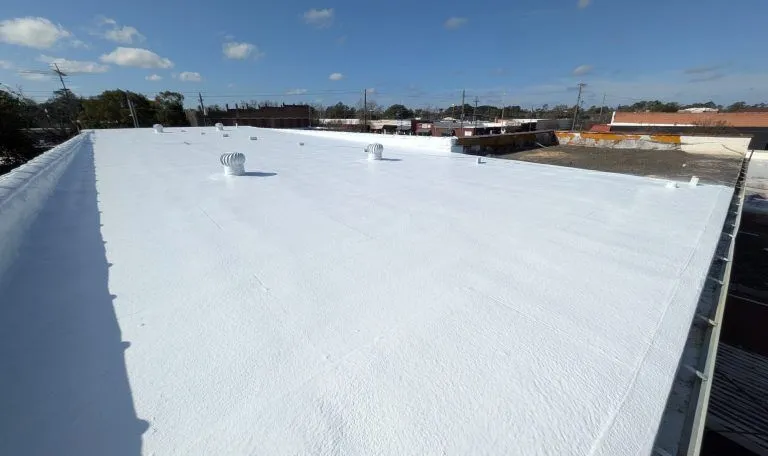
Then two coats of the topcoat build the final thickness. The roof turns from black to bright reflective white. It looks different. Performs differently.
How Long Will It Last?
A quality job typically adds 10 to 15 years. Warranties often match that range.
At the end, recoating is usually possible. A fresh layer over the old coating starts a new cycle. Each round costs less than the one before.
Compare that to replacement every 20 years. The lifetime savings are large.
FAQs
Is it true you cannot coat rubber roofs?
No, that is a myth from bad jobs. With correct cleaning and primer, modern coatings bond to EPDM very well.
Which is better for EPDM, silicone or acrylic?
Silicone wins where ponding exists. Acrylic works fine on well drained roofs and costs less upfront.
How do I know my EPDM qualifies?
The structure must be sound and insulation mostly dry. A pro inspection with moisture testing gives the answer.
Does coating fix shrinkage?
It helps control it. The coating skin reinforces the membrane and reduces pull at edges and flashings.
Will my energy bills drop?
White coatings reflect major heat. Black EPDM runs very hot. Most owners see real summer savings.
Can I recoat later instead of replacing?
Often yes. A new topcoat over the old system can start another warranty period at lower cost.
For buildings with aging rubber roofs, EPDM roof coatings deserve serious thought. The right contractor and the right prep turn a tired black roof into a protected asset for years.