
Custom socks can be a good first product for small brand orders because they are easier to size than shirts, jackets, or pants. They are compact, giftable, and suitable for brand merchandise, event orders, team items, customer gifts, and limited small-batch projects.
But custom sock orders still need planning. Buyers should think about size range, packaging, display, reorder risk, and how the design will look after wear.
Choose a Practical Size Range
Many adult socks are produced in a general size range, such as US men’s 6–12 or US women’s 5–10, depending on the product and market. Some projects may need separate size options, especially if the audience includes both youth and adults.
For a small first order, one adult size range may be easier to manage. For a larger order, buyers may consider multiple sizes to reduce fit complaints.
A small brand planning custom socks with logo orders should confirm size range before finalizing packaging, size information, and product details.
Pick a Sock Height That Matches the Use
Crew socks are often a strong choice because they offer enough room for logos, patterns, and hang tag presentation. Ankle socks are more subtle and may work for fitness or warm-weather projects. No-show socks are useful but harder to show because much of the sock is hidden when worn.
Knee-high socks can create a strong visual product, but they may be more specific in use and audience.
Packaging Changes the Perceived Value
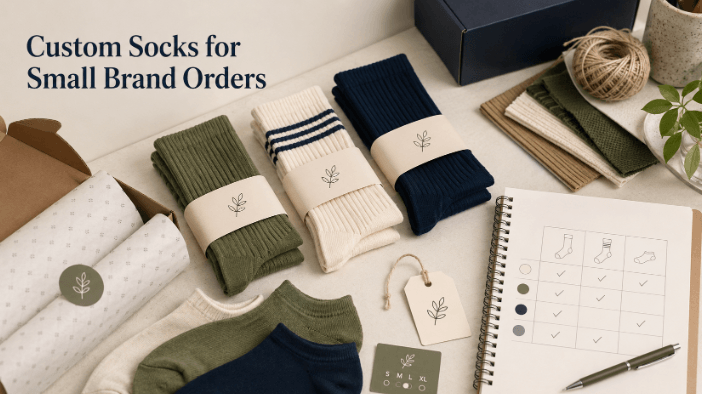
Custom socks need clean presentation if they will be handed out, gifted, packed in kits, or used for a small brand campaign. A paper band, hang tag, small card, or clean folded package can make the product feel more complete.
For a 25–50 pair test order, simple packaging may be enough. For 100–300 pairs, buyers may want more consistent labels, material information, size details, or care instructions.
Design for Reorders
A small-batch order may need to be reordered later if the design works well. Reordering can be difficult if the design uses too many special yarn colors or complex patterns. Buyers should keep a record of yarn colors, design files, size specifications, and packaging details.
This helps keep future batches consistent.
Match the Product With Sock Type
A buyer should compare the sock height, packaging needs, material use, and how people will wear the product before choosing the final style. For small brands planning socks alongside other custom accessories, working with Fastsewing can help keep product details, colors, and branding direction more consistent.
Common Buying Mistakes
One mistake is creating too many color options for the first order. This can split quantity and make reorders harder.
Another mistake is ignoring packaging until the last step. Packaging affects how the product looks when handed out, shipped, or included in a kit.
A third mistake is choosing a sock height that does not match the customer’s daily footwear.
See also: Complete Peristaltic Pump Systems: Evaluating Turnkey Solutions From China
Conclusion
Custom socks can work well for small brand orders because they are compact, wearable, and easier to manage than many apparel items. But the order still needs clear planning.
Size range, sock height, packaging, and reorder consistency should be decided before production. This helps the final product feel more complete and reduces risk for the buyer.